All Articles
BLM Runs Check on Assay Services
May 2003 by Scott Harn


Most laboratories involved were sent 4 samples containing known values of gold, silver, platinum, and palladium, and 2 samples that were complex blanks. Prices charged for assay services varied from $60, for fire assays, to $2,250 for a “tin fusion method.” In our review of the report, price did not seem to be reflected as a determining factor for accuracy. In some cases, a lower cost for service provided a more accurate assay.
The results of assays conducted are compiled in a 34-page report, including 16 pages detailing the reasons for and methods used in the study, and 18 pages of results. The volume of the report does not allow for inclusion in this publication, but ICMJ’s Prospecting and Mining Journal has made the entire document available free on our web site:
Study preface (.pdf file) 0.8MB
Study results (.pdf file) 1.0MB
Many of the results published were well within acceptable limits, but some were so far out in “left field” that utilization could be disastrous. Substantial quantities of precious metals were reported in some blanks. Some samples that contained valuable quantities of precious metals were reported as “none detected.” As a result of this report, several assay labs were barred from advertising in our publication.
BLM should be applauded for conducting this badly needed study, and hopefully they will continue this public service. The resulting report should be a valuable tool as a validation for assay services.

© ICMJ's Prospecting and Mining Journal, CMJ Inc.

Additional articles that might interest you...
Melman on Gold & Silver
July 2013
Once again last month the world seemed to be tottering uncertainly on the precipice of whether to continue with some manner of austerity in order to begin restoring government balance sheets to some semblance of fiscal conservatism or whether to openly return to the previous eras of wide-open stimulation via debt, deficits and unlimited money creation.
Once again last month the world seemed to be tottering uncertainly on the precipice of whether to continue with some manner of austerity in order to begin restoring government balance sheets to some semblance of fiscal conservatism or whether to openly return to the previous eras of wide-open stimulation via debt, deficits and unlimited money creation.
Placer Gold in Russia
November 2005
Russia is the world’s largest country, some 66 million square miles that stretch over 6,000 miles, east-west, across northern Europe and Asia. The population of 150 million is only half that of the United States, being confined mostly to the European part of Russia and the southern part of Siberia.
Russia is the world’s largest country, some 66 million square miles that stretch over 6,000 miles, east-west, across northern Europe and Asia. The population of 150 million is only half that of the United States, being confined mostly to the European part of Russia and the southern part of Siberia.
Detectors Versus Pans
November 2010
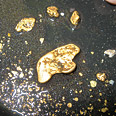 Mike scored the best with a total of one-half ounce of gold nuggets. Tom, Brian and Greg each had pieces in the one and a half pennyweight range. The rest of us had small gold and nothing like these three.
Mike scored the best with a total of one-half ounce of gold nuggets. Tom, Brian and Greg each had pieces in the one and a half pennyweight range. The rest of us had small gold and nothing like these three.
Klondike Gold
September 2003
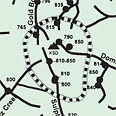 Rich placer gold deposits were found in the Klondike district of Yukon in 1896, and a wild gold rush ensued. The district is east and southeast of Dawson (pop. 1,300), mostly along Bonanza and Hunker Creeks, and their tributaries.
Rich placer gold deposits were found in the Klondike district of Yukon in 1896, and a wild gold rush ensued. The district is east and southeast of Dawson (pop. 1,300), mostly along Bonanza and Hunker Creeks, and their tributaries.
Legislative and Regulatory Update
April 2007
• Comments needed
• California tries another route to restrict miners and dredgers
• Comments needed
• California tries another route to restrict miners and dredgers
The Business of Mining—The Benefits of an S Corporation
November 2007
Imagine the liability protection of a corporation and the pass-through tax benefits of a partnership in one entity for your mining or prospecting operation.
Imagine the liability protection of a corporation and the pass-through tax benefits of a partnership in one entity for your mining or prospecting operation.
Subscription Required:
The Ball Mill
• Our Readers Say
• WMD Raffle Raises Funds for Lawsuit
• Gold in Alabama
• From the Editor
• Yukon Placer Miners Fighting Extreme Discharge Limits
• Picks & Pans: Red Beryl Mining—Beaver County, Utah
• The Investigation
• A Gold Detector Sitting in a Closet Only Finds Dust—A Potpourri of Detector Tips
• Central Coast Ranges
• Poll: Montana in Favor of Repealing Anti-Mining Initiative
• Platinum in Laccoliths
• Mining Stock Quotes and Mineral & Metal Prices
• Looking Back
• Melman on Gold & Silver