All Articles
Relocating A Historic Vein
April 2008 by Don Robinson
 Opportunities exist in both hardrock and placer. Production costs to operate a small placer mining project are a lot less than for a hardrock mine. Underground placers are a different story, but generally, recovering placer gold takes...
Additional articles that might interest you...
Our Readers Say
November 2001
“Why is so much public land closed off to the recreational miner?”
“Why is so much public land closed off to the recreational miner?”
All About Garnets
February 2013
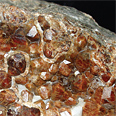 I get a lot of questions from prospectors about garnets, their value and what they tell us about the geology of some types of mineral deposits. So I thought it would be a good idea to take a closer look at the lowly garnet and learn a bit more about it.
I get a lot of questions from prospectors about garnets, their value and what they tell us about the geology of some types of mineral deposits. So I thought it would be a good idea to take a closer look at the lowly garnet and learn a bit more about it.
I Finally Made It to Northern Nevada
August 2014
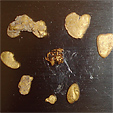 After a while I got a very nice signal and out came a sweet kidney-shaped bit of gold weighing about three grams.
After a while I got a very nice signal and out came a sweet kidney-shaped bit of gold weighing about three grams.
Why Did This Silver Mine Close?
October 2014
Bad management, cave-ins, the lack of adequate capitalization, bad winters—the list of possible scenarios that might have closed a mine is a long one.
Addressing EPA Overreach: What Dredgers Need to Know
March 2016
The Environmental Protection Agency (EPA) has been attempting to extend their authority and intimidate miners and other public land users for decades. Suction gold dredgers are no exception, and we want to highlight a recent example of how to deal with this federal overreach.
DNI's Black Shale Metals Projects
October 2012
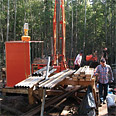 While much attention in northern Alberta has been focused on the rapidly growing “oil sands,” another story of particular interest to the mining community has been taking shape virtually unnoticed in the same region.
While much attention in northern Alberta has been focused on the rapidly growing “oil sands,” another story of particular interest to the mining community has been taking shape virtually unnoticed in the same region.
Flat-Fault Gold
August 2001
Gold and other valuable metals are often deposited in breccia and rubble formed by flat or gently-dipping faults. Such faults are commonly found in areas of crustal stretching caused by the movement of tectonic plates. Flat-faults are especially common in southeast California, southern Arizona, and northern Sonora, Mexico. However, they can be present anywhere that crustal stretching has occurred.
Gold and other valuable metals are often deposited in breccia and rubble formed by flat or gently-dipping faults. Such faults are commonly found in areas of crustal stretching caused by the movement of tectonic plates. Flat-faults are especially common in southeast California, southern Arizona, and northern Sonora, Mexico. However, they can be present anywhere that crustal stretching has occurred.
Subscription Required:
The Bawl Mill
• Gold Hits $1,000! What the Gold Price Is Telling Us
• Assembling A First Class Mining Property
• Quebec Tops Nevada in Survey of Miners
• The Lost Silver Triangle of the Sierra Madre—Part I
• The Mama John
• Australia's First Gold Rush
• Government to Buy New World Mine Claims
• Melman on Gold & Silver
• Mining Stock Quotes and Mineral & Metal Prices