How to Evaluate Mineral Claims—What to Know Before You Buy
 Even though they have put down thousands of dollars, the buyers often stop paying on their claims part way through the process after they realize they’ve been duped, but the company just sells it again to another buyer.
How to Interpret Assay Values
This assay system of ounces per ton sounds simple enough, but the use of the metric system and the additional measuring terms of “grams per ton” and “parts per million” (ppm) has created some misunderstanding of ore value.
How to Recognize Hard Rock Gold Ores
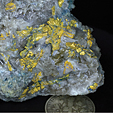 I regularly get inquiries along the line of: “Hey, I found this rock, and I think it might be gold ore. How can I tell?” Prospectors are always on the lookout for gold-bearing rocks that may be the source of any nearby placer gold.

How to Make a Rock Sled for Dredging
 When my “anonymous” friend told me the rock tub was probably a hundred miles from where he safely stashed it, I decided to build another sled and improve on my old design.
How to Stake Your Own Claim—Researching Mining Claims
 Once you have determined that the land is locatable, the next step in the claim research process is to determine if the land has already been claimed by a previous locator.
Volume is the Key to Success
 While recovery rates are important, they must necessarily be secondary to the volume of material processed. Running more material at lower recovery rates is generally preferable to increasing the efficiency of the system.

Shaker Tables for Processing Hard Rock Ores
 Most placer equipment is really made with gold in the 30 and larger mesh sizes in mind, though if carefully used can often get reasonable recovery down to the 50 mesh size.
Hand Panning Micro-Fine Gold
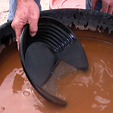 Once you get down to the black sands or a few tablespoons of material, the technique changes dramatically.
Sampling, Hydro-Shocking & Cleaning Quartz-Gold Specimens
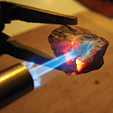 Many specimens have a small amount of gold and are not pretty to look at. There is a nifty way to give them a makeover and make them much prettier than they were when you found them.

The PIGMI—a DIY Crevice Tool
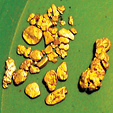 I’ve had great success using it to gather gold from crevices. I’d like to share the design with all of you gold miners reading this article and hope that you get as much satisfaction building and using it as I did.
Detecting Basics: Lose the Bad Habits Not the Gold
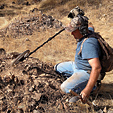 I will make the assumption that when any of you take a detector in your hand and head out prospecting for gold you are probably anticipating finding some gold. That’s the general idea, right?
Underground Mining: Getting the Ore Out
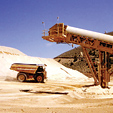 Choosing the right method to move your ore and waste is all about making the right choices. Sometimes more than one method may be used during the life of a mine as an operation expands and grows.

Ask The Experts: Equipment to break up heavy clay
Q: I am looking for a “trommel machine” that doesn’t separate anything but clay slurry from rock hard clay.
What Have You Got to Lose?
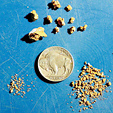 It’s accepted knowledge that wet methods will recover more fine gold than dry methods and processing the gravel as a whole will get more gold than only using a metal detector. The question is how much more?
How to Upgrade Your Pocket Plunger
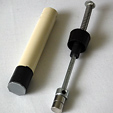 These three simple upgrades, when taken together, will considerably increase a pocket plunger’s magnetic pull and make it less susceptible to breakage.

Ask The Experts: Should I remove someone else’s claim post from my claim?
Q: Can and should you remove their poles and notice right then and there or should you wait until you have convinced them of their trespass?
Ask The Experts: Question about resolving a quitclaim error
Q: I am in the process of filing an appeal with my lawyer, but am seeking more “expert” advice in the arenas of “mining claims” and BLM jurisdiction.
Moving The Big Rocks
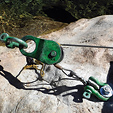 The anticipation of finding out if the system of snatch blocks, shackles, chokers, anchor points, and the strap binding the massive slab of rock in the bottom of the river would even budge an inch was weighing on me.
Attention to Detail - Part II
 Ditches almost always started in the high country and contoured the mountainsides, making a long drop, usually many miles away, to the goldfields. There are ditches in Trinity County that originate at seven and eight thousand feet in the Trinity Alps that carried water almost thirty miles.
Ask The Experts: How do I identify gold in hard rock that may be mixed with other metals?
Q: Aside from the softness scratch test and other methods of identification, what feedback would you have on identifying gold in hard rock that may be mixed with other metals that affect its color?